





Price: $199.99
(as of 2026-11-04 05:34 GMT+0000 – Details)

Network Compatibility and Limitations
The Blackview Wave 10 is marketed as a T‑Mobile‑only 4G LTE device for the United States. It will not operate on AT&T, Verizon, or any other domestic carrier networks, and it does not support 5G cellular service despite offering 5 GHz Wi‑Fi. The handset also lacks NFC hardware, which means contactless payment services such as Google Pay cannot be used. Buyers must verify that their T‑Mobile SIM is active and that local T‑Mobile coverage meets their needs before purchasing, as the phone cannot fall back to other networks or provide NFC‑based transactions.
Extended Warranty Coverage
Blackview includes a three‑year extended warranty with the Wave 10, positioning the phone as a practical choice for users who want longer protection against defects. Warranty service is handled through the Amazon order page, where customers can request troubleshooting assistance or eligible repairs. The warranty terms apply as written by the manufacturer, and no additional coverage beyond the stated three years is implied. This arrangement may reduce out‑of‑pocket repair costs for hardware failures that occur within the warranty window.
Large 6.88‑Inch 120 Hz Display
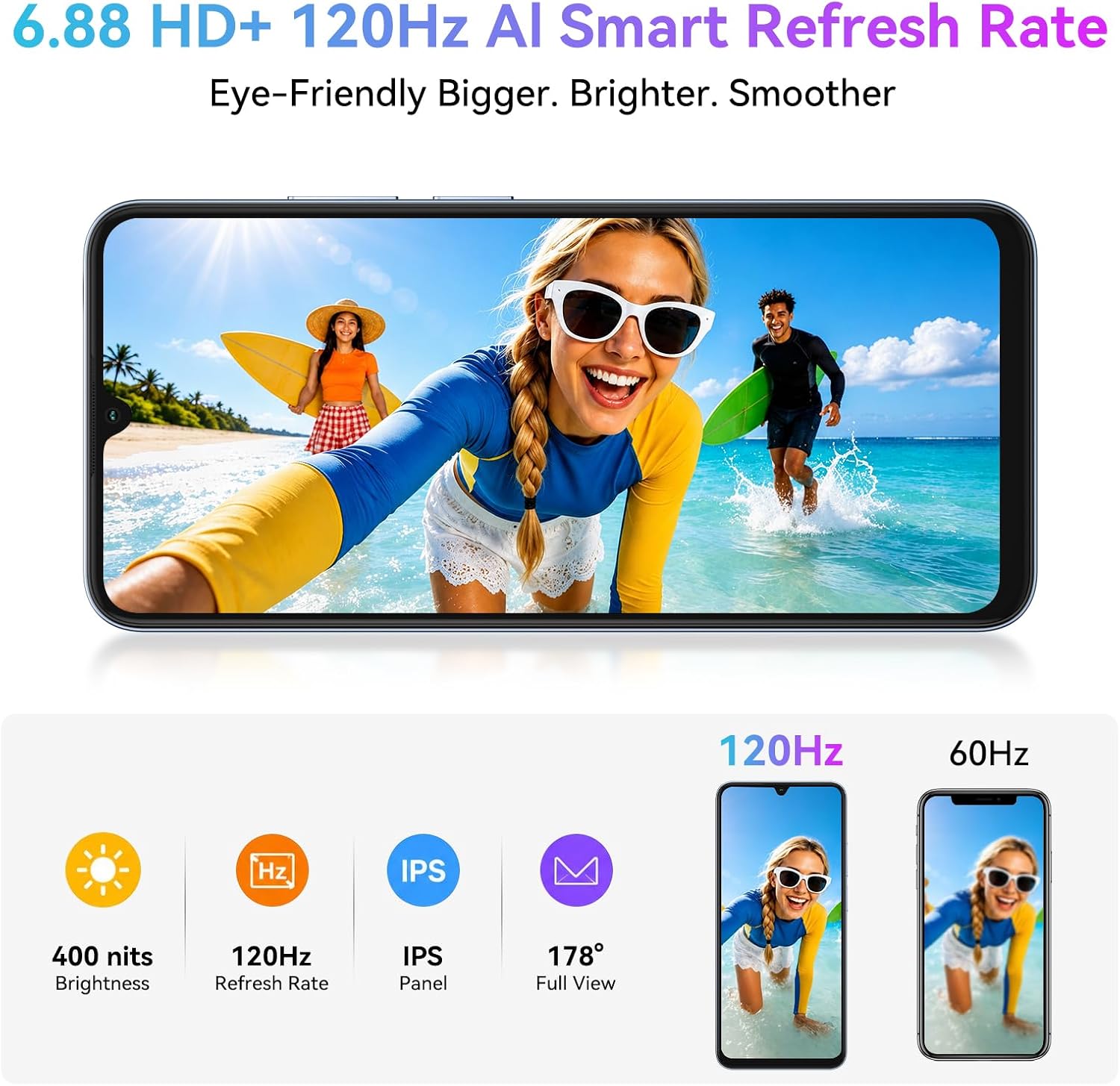
The handset features a 6.88‑inch screen with a 120 Hz refresh rate, providing a spacious viewing area for reading, browsing, video playback, and navigation. The higher refresh rate makes scrolling and animations appear smoother compared with standard 60 Hz panels, which can improve the experience during everyday tasks such as social‑media feeds or web pages. However, the display’s resolution and panel technology are not specified, so color accuracy, brightness, and outdoor visibility remain unknown and should be evaluated against personal expectations.
32 MP Rear Camera with Live Photo
A 32‑megapixel rear camera captures still images, and the Live Photo function records a brief motion clip around each shot to preserve a sense of movement. The description notes that the camera is best suited for casual photography in good lighting, implying limited low‑light performance and no advanced computational photography features such as night mode or optical zoom. Users who prioritize high‑quality images in varied conditions may find the camera adequate for everyday snapshots but insufficient for demanding photographic work.
Android 16, DokeOS 5.0, and Memory Configuration
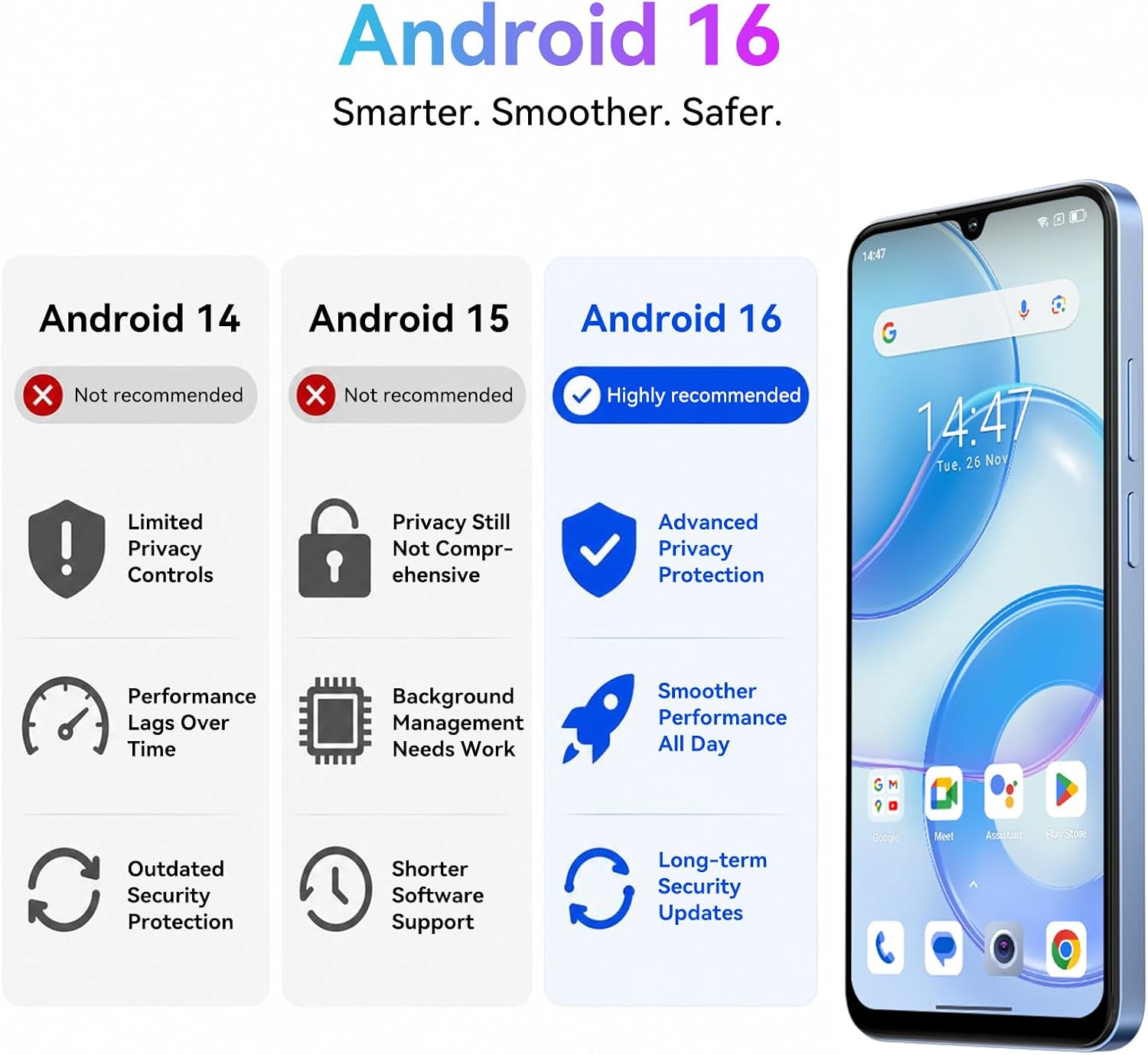
The Wave 10 ships with Android 16 layered with Blackview’s DokeOS 5.0, offering a modern software baseline for calls, messaging, web browsing, streaming, and light productivity. It provides 8 GB of physical RAM complemented by up to 24 GB of virtual RAM, which can be toggled in settings to aid multitasking when many apps are open. Virtual RAM uses storage space as swap memory, so its effectiveness depends on the speed of the internal storage and the current load; it does not replace the performance of additional physical RAM.
Design, Weight, and Storage Expansion
At roughly 200 grams, the phone is lightweight enough for comfortable all‑day handling, and its matte‑textured back reduces visible fingerprints. The device includes 128 GB of built‑in storage and supports microSD (TF) cards up to 1 TB, giving ample room for apps, photos, videos, and documents. The memory card is not bundled, so buyers must purchase one separately if they need the maximum expansion. The combination of modest weight and generous storage flexibility makes the handset suitable for students, commuters, and travelers who carry a single device.
Battery, Included Accessories, and Security Options
A 5,000 mAh battery powers the Wave 10 through typical daily activities such as calls, messaging, navigation, video streaming, and social‑media use; actual endurance varies with signal strength, screen brightness, and app load. The retail box supplies a protective case, a pre‑applied screen protector, a charger, and a USB cable, reducing the need for immediate extra purchases. For unlocking, the phone offers Face Unlock, a side‑mounted fingerprint sensor integrated into the power button, and traditional PIN, password, or pattern methods, giving users multiple convenient authentication choices.