



Price: $45.90
(as of 2026-11-04 05:58 GMT+0000 – Details)

Broad Compatibility Across Major Desk Phone Platforms
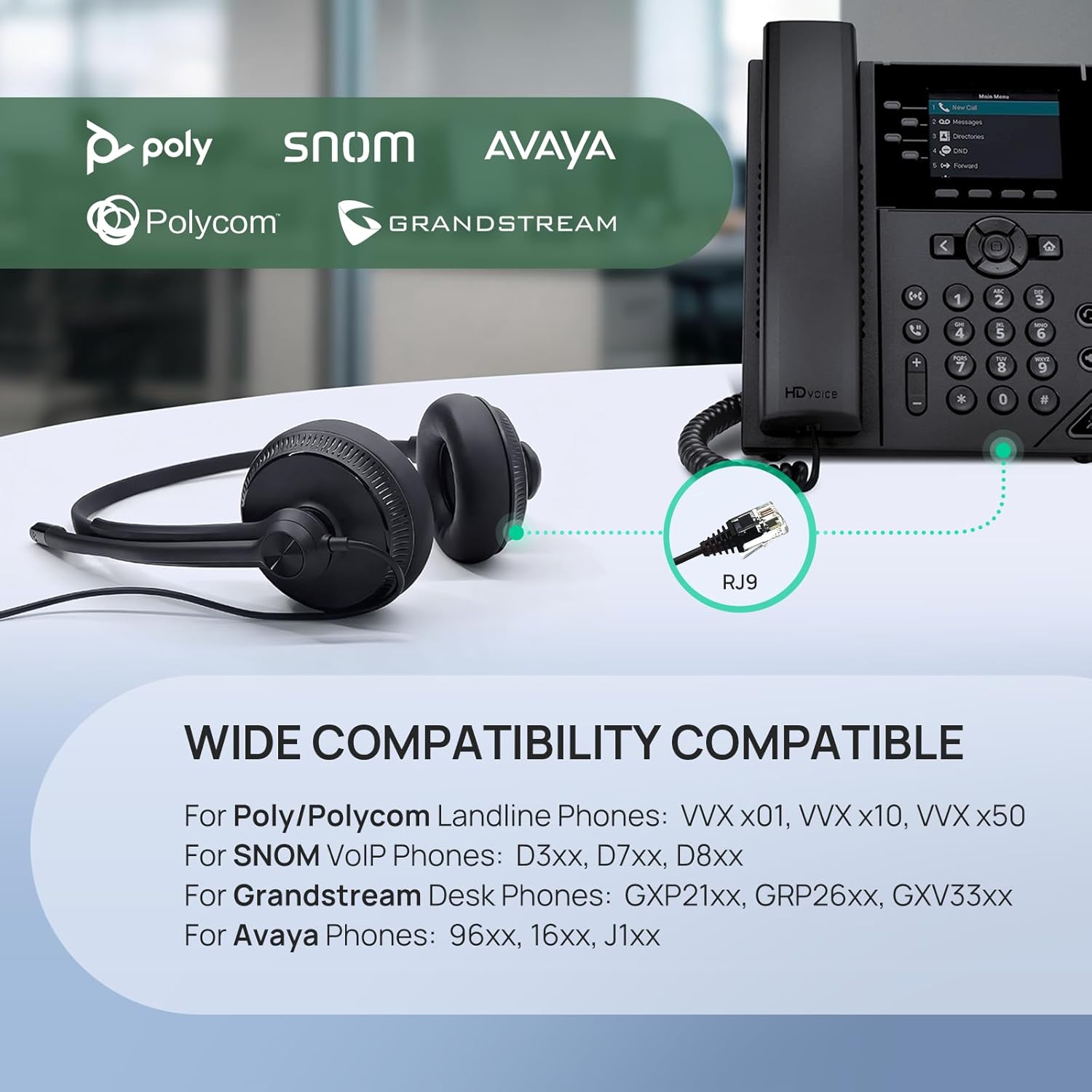
The YHS34 is engineered to work with a broad range of desk phones. The manufacturer lists full compatibility with Yealink T2x, T3x, T4xP/G/S/U, T5x, VP59, and Teams or SFB MP/T5x series. It also supports Poly VVX x01, x10, and x50 models, as well as SNOM D385, D735, and D765 handsets. Because the list is extensive, users should still consult the official Yealink compatibility portal before purchase to confirm that a specific firmware version or regional variant is supported. This step avoids unexpected mismatches that could prevent the headset from being recognized or from receiving the automatic acoustic tuning that the phones provide.
Plug‑and‑Play Connectivity with Automatic Acoustic Optimization
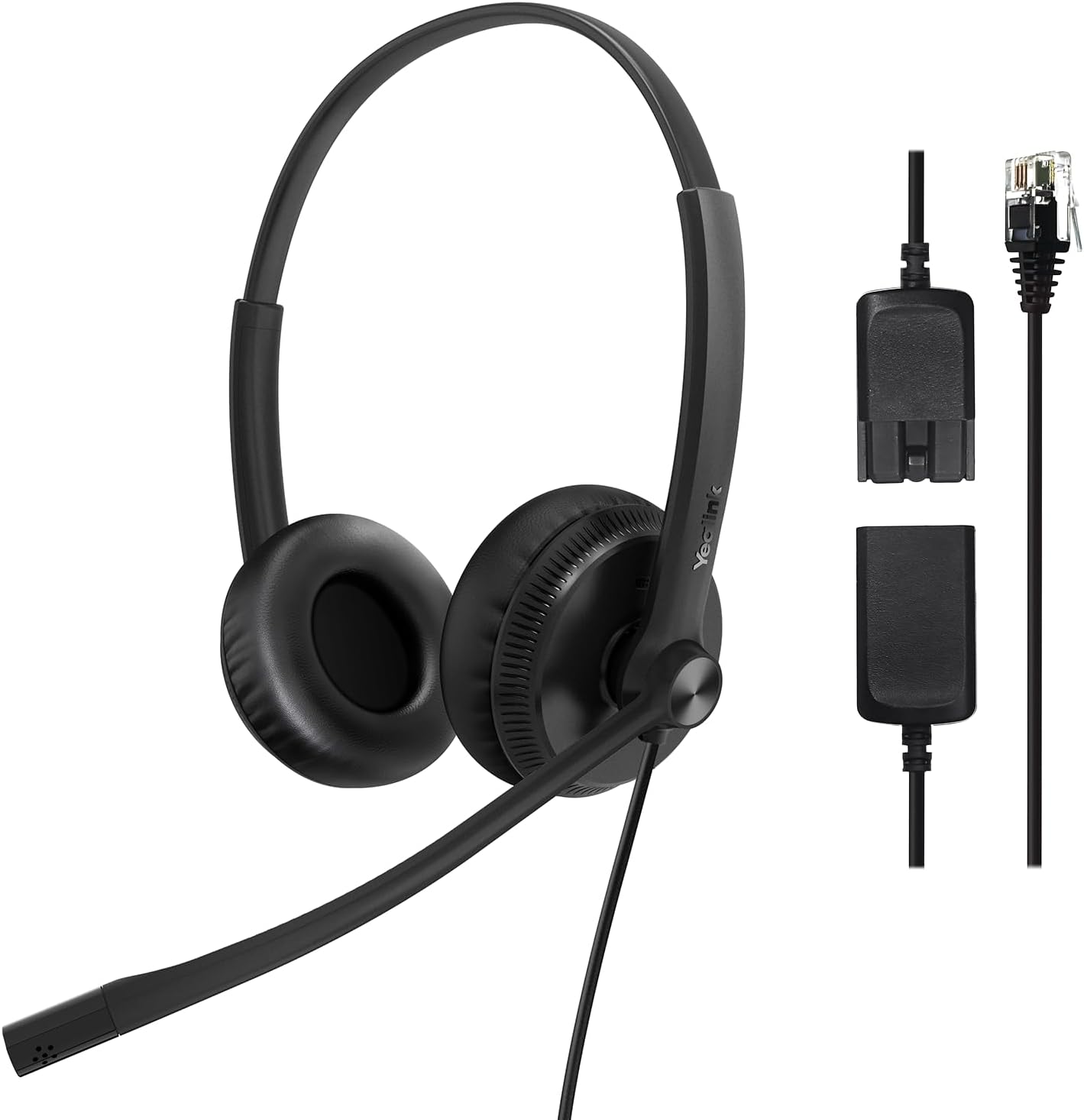
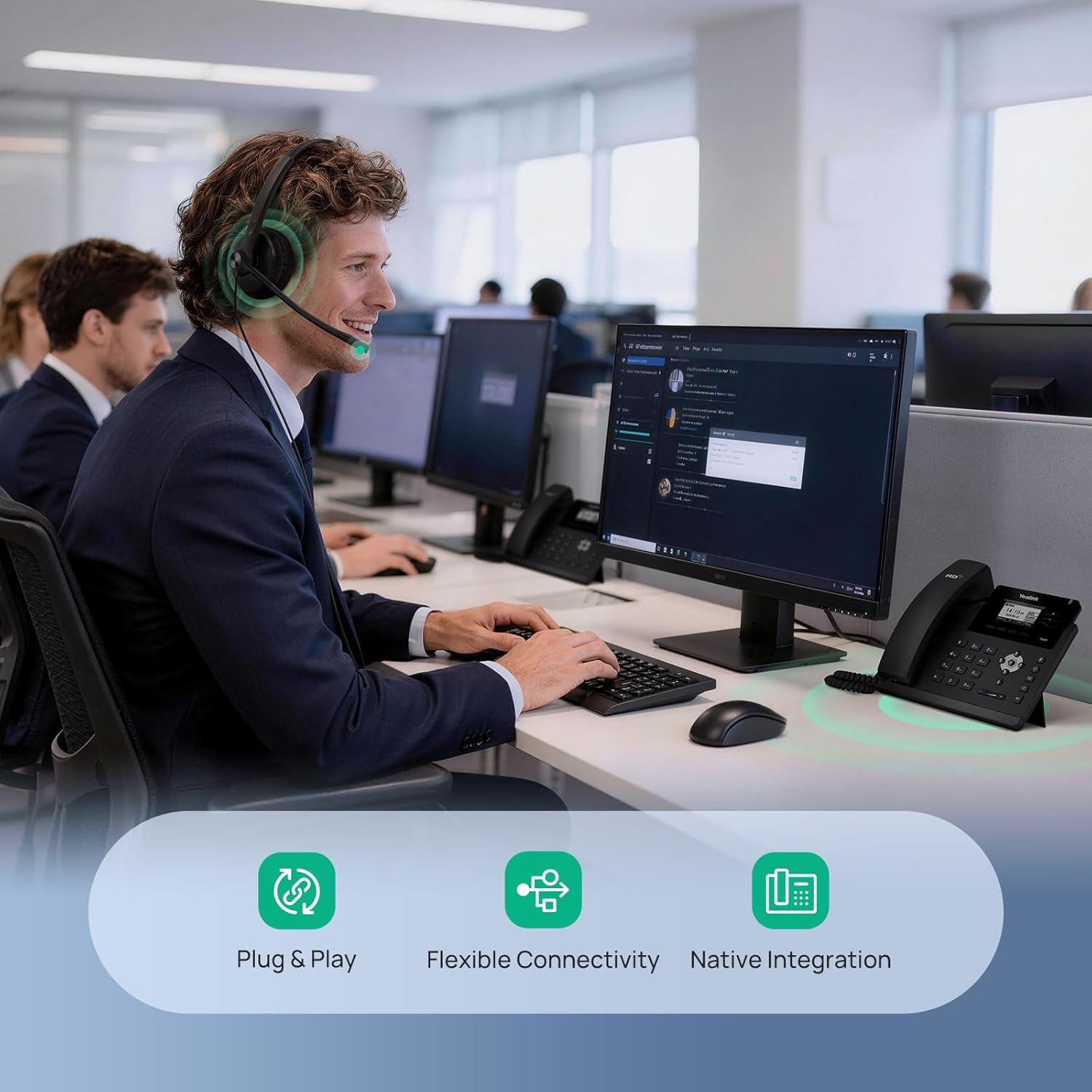
The headset connects through a Quick Disconnect (QD) to RJ9 cable that plugs directly into the handset port of supported IP phones. This plug‑and‑play arrangement eliminates the need for additional adapters, drivers, or software configuration. When the connection is made, compatible Yealink phones automatically detect the YHS34 and adjust their internal acoustic parameters, such as gain and equalization, to match the headset’s characteristics. The result is a ready‑to‑use audio path that delivers consistent volume levels and balanced frequency response without manual tuning. For environments that use mixed phone models, the QD connector also allows the same headset to be swapped quickly between devices, reducing downtime during hot‑desk scenarios.
Premium Leather Ear Cushions for Enhanced Comfort and Durability
The YHS34 upgrades the ear cushions from the foam material used in the Lite version to premium leather. Leather provides a softer contact surface that conforms to the shape of the ear, distributing pressure more evenly across the pad. This material also resists wear and tear better than foam, maintaining its shape and comfort over months of daily use. Because the cushions are replaceable, users can swap them out when they become soiled or lose elasticity, extending the overall lifespan of the headset without purchasing a new unit. The upgrade is especially valuable for employees who spend six or more hours on calls each day, as it reduces the likelihood of ear fatigue and skin irritation.
High‑Quality Audio Through Independent Cavity Design and Passive Noise Cancellation
Audio performance is centered on a high signal‑to‑noise ratio speaker housed in an independent acoustic cavity. This design isolates the driver from the headset’s structural vibrations, which helps preserve clarity and prevents resonance that can color the voice signal. Passive noise cancellation is achieved through the sealed ear cup and the leather cushion’s density, attenuating ambient office sounds such as keyboard clicks or HVAC hum. The combination yields a richer, more natural reproduction of the caller’s voice while keeping the microphone’s pickup focused on the speaker’s mouth. However, because the noise reduction is passive, extremely loud environments may still bleed into the conversation, and the headset does not include active electronic noise‑cancelling circuitry.
All‑Day Ergonomic Design with Replaceable Cushions and Lightweight Frame
The headband is shaped to follow the natural contour of the head, distributing weight across the crown rather than concentrating it on the temples. Combined with the replaceable leather cushions, this ergonomic profile allows the headset to rest softly over the ears without creating pressure points during marathon conference calls. The lightweight frame, constructed from durable plastics, keeps the overall mass low enough that users can wear the device for an entire shift without noticing fatigue. Since the cushions can be removed and cleaned, hygiene standards in shared‑desk environments are easier to maintain. The design does not incorporate a folding mechanism, so storage requires a flat surface or a dedicated headset hook.
Deployment Considerations and Known Limitations
When deploying the YHS34, administrators should verify each target phone against the Yealink compatibility list, as firmware revisions can add or remove support for specific headset models. The QD‑to‑RJ9 cable is fixed in length, which may limit positioning flexibility on larger desks or when the phone is mounted on a wall. The headset lacks inline call controls such as volume buttons or mute switches; all call handling must be performed on the phone itself. Additionally, the passive noise cancellation cannot compensate for highly reverberant rooms, so acoustic treatment of the workspace remains important. These factors should be weighed against the headset’s price point and the simplicity of its plug‑and‑play deployment.
Wired Power Delivery and Mobility Constraints
Because the YHS34 is a fully wired solution, it draws power directly from the phone’s handset port and requires no batteries or charging. This eliminates concerns about battery degradation over time and ensures uninterrupted operation during long shifts. The absence of wireless components also removes potential interference with other RF devices in dense office environments. However, the wired tether restricts mobility to the length of the RJ9 cable, so users who need to move away from the desk must either unplug the headset or use a longer extension cable, which is not included.