



Price: $38.99
(as of 2026-11-04 03:15 GMT+0000 – Details)

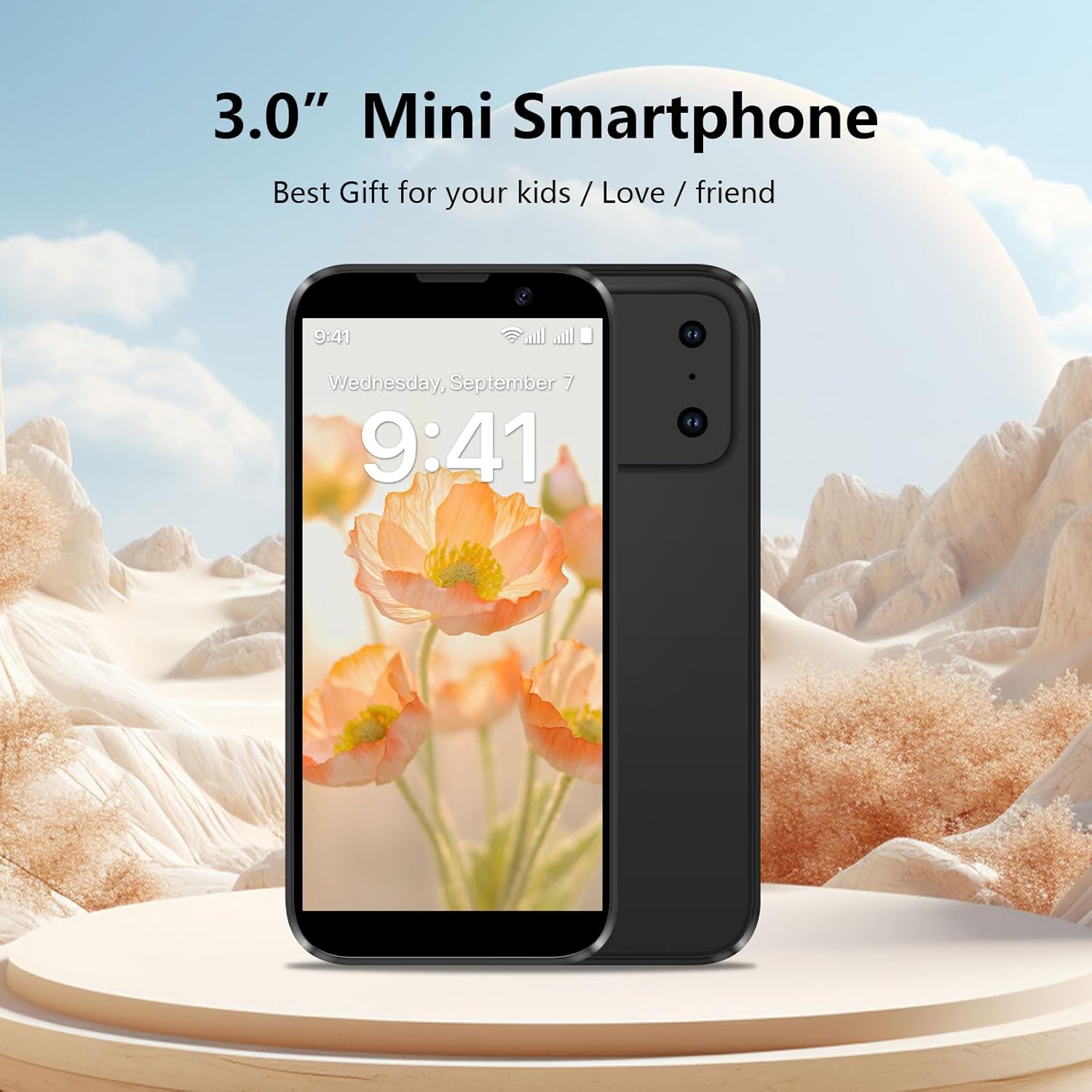
Ultra‑Portable Form Factor
The device measures 3.54 × 1.97 inches, allowing it to slide into a shirt pocket, a small clutch, or a running belt without adding noticeable bulk. This dimensional profile makes it a practical companion for minimalist travel, outdoor jogging, or as a lightweight backup when a primary handset is unnecessary. The description explicitly states that the unit is Wi‑Fi only and lacks a SIM slot, so voice calls and cellular data must be routed through an available wireless network. Users who rely on constant mobile connectivity should therefore plan for hotspot access or tethering from another device.
Targeted at Kids and Students
Designed for smaller hands, the handset offers essential communication functions—Wi‑Fi calling, messaging, and GPS location sharing—while limiting exposure to a large, distraction‑heavy display. The three available color options give a degree of personalization that may appeal to younger users. Because the phone cannot connect to a cellular network, parents must ensure that a reliable Wi‑Fi environment exists at school, home, or any location where the child might need to be reached. The absence of a SIM card also means that emergency calls over traditional mobile networks are not possible.
Face ID and Dual‑Camera System
Security is handled through facial recognition, providing a convenient unlock method comparable to that found on larger flagship models. The rear camera captures 5 megapixels and the front camera 3 megapixels, sufficient for basic snapshots, video calls, or quick document scans. However, the modest sensor resolutions limit low‑light performance and detail retention, so the cameras are best suited for casual use rather than high‑quality photography. The biometric feature adds a layer of privacy without requiring a fingerprint sensor, which would be difficult to accommodate on such a compact chassis.
Android 8.1 Platform and App Ecosystem
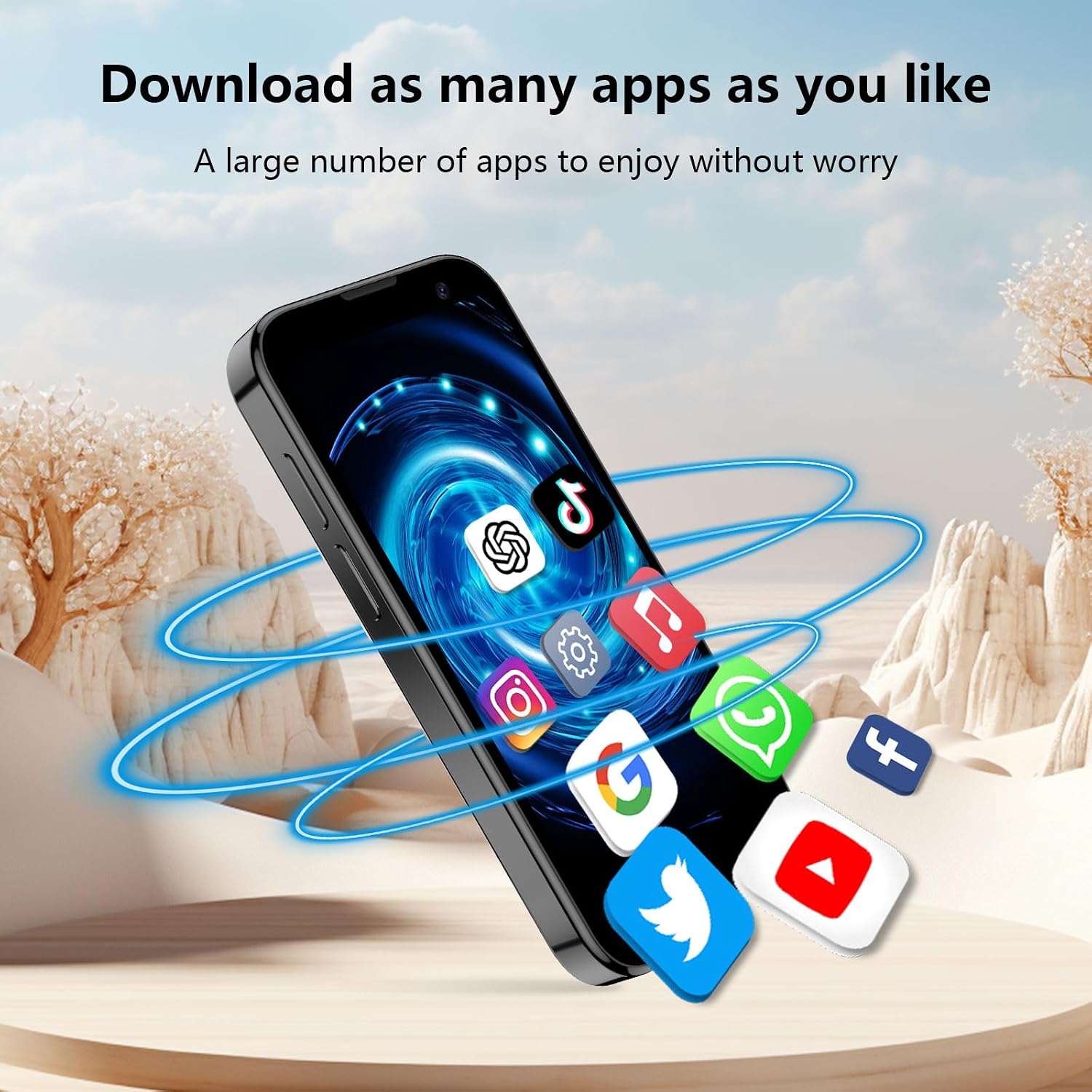
A quad‑core processor runs Android 8.1, granting access to the Google Play Store and allowing installation of mainstream apps such as WhatsApp, Instagram, and YouTube. This software base supports a “digital detox” approach: the small screen discourages prolonged scrolling while still delivering core messaging and media functions. The operating system version is several generations behind current releases, which may affect compatibility with newer app updates and security patches. Users should verify that required applications still support Android 8.1 before relying on the device for critical tasks.
Expandable Storage via MicroSD
The handset includes a second slot dedicated to a microSD card (not supplied), enabling storage expansion for music libraries, photo archives, or emergency documents. This flexibility is valuable for a secondary device that may be used intermittently on business trips or during travel where cloud access is unreliable. The maximum supported card capacity is not specified in the provided information, so buyers should consult the manufacturer’s specifications to avoid purchasing an incompatible high‑capacity card. Transfer speeds will depend on the card class chosen.
Connectivity Constraints and Practical Use Cases
Because the phone operates exclusively over Wi‑Fi, its usefulness hinges on the availability of wireless networks. In environments such as offices, hotels, cafés, or homes with stable broadband, the device can serve as a lightweight communication hub. In contrast, areas lacking Wi‑Fi—rural outdoors, transit tunnels, or certain international locations—will render the handset unable to send or receive data. The product description markets it as a reliable secondary phone for business trips and international roaming, but the roaming capability is limited to Wi‑Fi hotspots rather than cellular roaming agreements.
Overall Positioning as a Minimalist Companion
Combining a tiny footprint, basic Android app support, facial unlocking, and expandable storage, the handset targets users who prioritize portability and simplicity over full‑featured smartphone performance. It functions well as a backup communicator, a child’s first connected device, or a travel‑focused gadget that reduces pocket weight. The trade‑offs—no SIM support, an older Android version, modest camera resolution, and dependence on Wi‑Fi—should be weighed against the intended use case to determine whether the device meets the user’s connectivity and functionality requirements.